Monday, June 24, 2013

Southern Germany- Day 6

Having recently been in the urban and hustling city of Berlin to now residing in the mountaneous region of Southern Germany is such a transition. Everywhere is so picturesque and the two castles we visited today, Hohenschwangau and Neuschwanstein were amazing. Honhenschwangan was King Maximilan II of Bavaria's and the exterior is a neogothic style, whereas, Neuschwanstein is a Romanesque style is a somewhat magical with the beautiful towers, breathtaking views, and orante interior. Similar to King Ludwig's palace (which we visited yesterday), his bedroom was the most elaborate and decorated in shades of blue, which was the King's favorite color. Each of the views from the rooms were spectacular and one of balconies provided a great view of a waterfall. 


 Stepping out of the castle, we walked around the castle and up a mountain to a bridge directly above the waterfall. The bridge was very crowded, but once we muddled our way through the tourists, the view of the castle and waterfall were amazing. 

In the evening, we visited the ruins of Burg Falkenstein, the highest castle ruins in Germany. 
These ruins were originally owned by a count in the medieval times and were considered to be 
a castle; however, this castle was eventually ruined partly due to lighting. King Ludwig planned 
on buying this territory to build his own castle, but was unable to do so due to his early death. 
After enjoying the 360 view of the countryside from this elevated height, we had tasty
hot chocolate and superb ice cream (this is actually the best ice cream I've ever tasted)
at the nearby hotel at Burg Falkenstein.  


Guten tag!

Sunday, June 23, 2013

Southern Germany- Day 5


Visiting Herrenchiemsee was spectacular. The entire island was beautiful and it felt as if we were stepping into the countryside. Upon taking a ferry and reaching Herrenchiemsee, we walked through a dirt pathway surrounded by lush green trees and meadows until we came across King Ludwig's palace. The garden was magnificent with three water fountains containing Greek styled sculptures and a clear view of the island's main lake. 


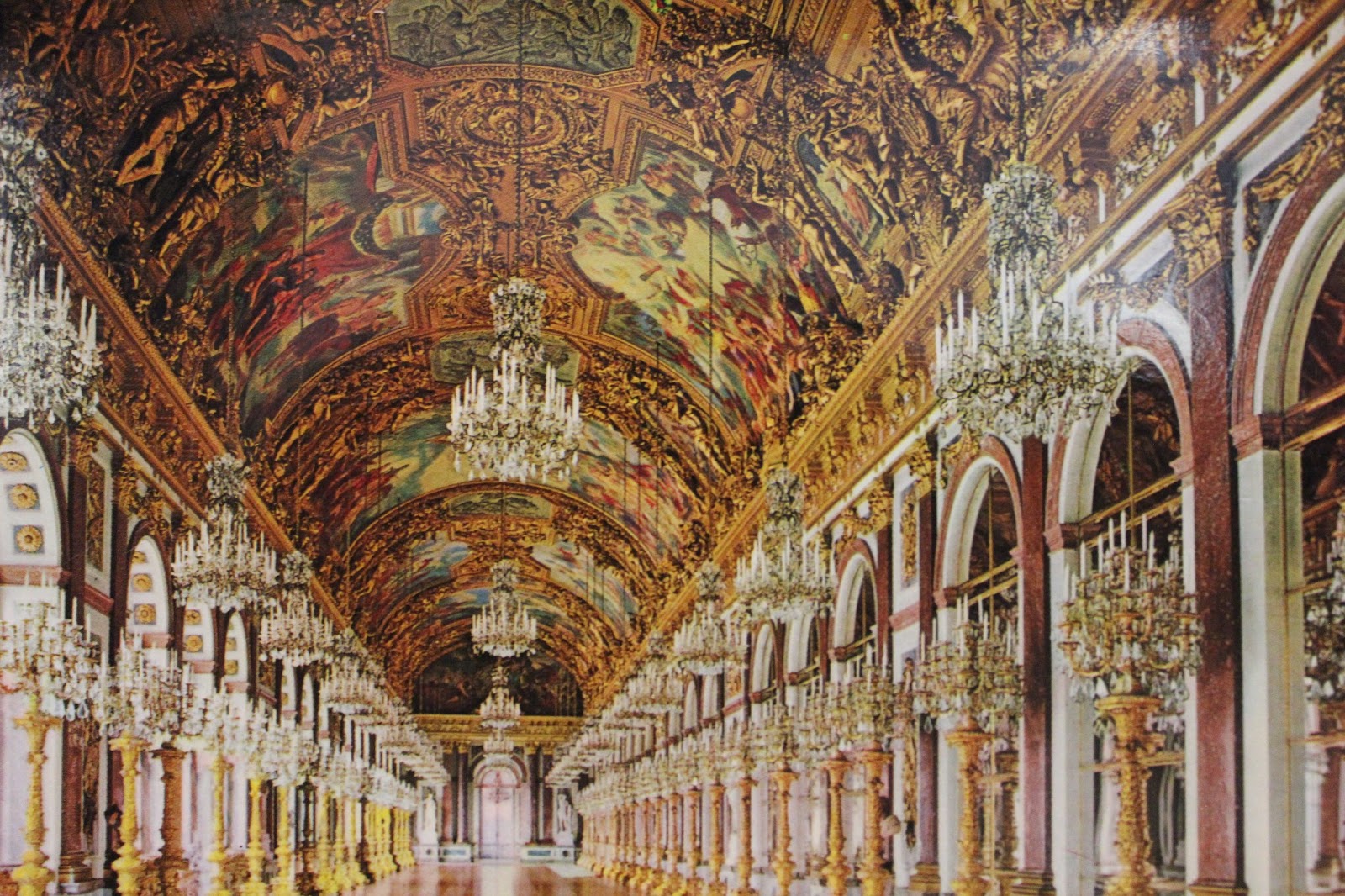
Inside the palace was absolutely incredible. The palace was modeled after Paris' Palace of Versailles and originally 70 rooms were designed; however, only 20 were completed since the king ran out of money before finishing all the rooms. Due to King Ludwig's obsession with France's Louis XIV, all the artwork depicts King Louis XIV and his successors' life (palace contains no artwork of the king himself). The rooms of the palace were extraordinary and overembellished witht eh porcelain chandelier, pool-sized bath tub, and gold leaf covering nearly 3/4 of some of the rooms. With such a beautiful palace, it's surprising that the King only spent a total of 10 days in the palace in isolation. With the exeption of his servants,  King Ludwig didn't invite any guests into his palace at Herrenchiemsee nor his Castle of Neuschwanstein. He was very depressed and died at a young age of 40. 


After touring the palace, we took the ferry again to the nearby town on the island. Here, we visited with the chapel, restaurants, and other shops. It was nice exploring the town area- it was so quainte and it was interesting seeing individuals dress up in traditional German attire such as dirndl dresses and lederhosens. 


Munich- Day 4

Unfortunately, with leaving the apartment late and heavy traffic, we weren't able to tour Dachau's concentration camps. However, we did settle into our apartment (view from apartment on left) and enjoy a late dinner at the Hofbrau-house. This beer palace was extraordinary with its' grand architecture and 3 levels each packed with tourists and some locals, musicians and dancers performing ont he ground floor and upper level, and individuals singing along to the tunes while chugging their liters of beer. 


Upon being served our meal, we were amazed by the quantities of each platter -- the big and buttery potato dumpings, humongous chunks of juicy pig knuckle, all of which was soaked in a pool of sauce. It was quite a unique experience and I appreciated the section above the stage explaining the origin of the Hofbrau-house. Originally, there were two Hofbrau-Houses; however, with the increasing popularity of whitebeer, the original Hofbrau-House brewery became too small to produce both brownbeer and whitebeer. Therefore, a larger brewery was invested in by Maximilian I (Son of duke Wilhelm) and today is known as the Hofbrau- House beer palace. 

Tomorrow we'll see King Ludwig's palace! 


Thursday, June 20, 2013

Berlin- Day 3

Waking up early in the morning to arrive on time to the Reichstag was so worth it! The Reichstag's audio tour led visitors through a spiral-like pathway inside a dome, which offered spectacular views of various sites in Berlin such as the Tiergarten (which houses the most animal species in the world) and buildings of the parliament and government. 


Upon completing the tour, we walked a few blocks down the street to views the Brandenburg Gate. The Brandenburg Gate is an important monument in Berlin and symbolizes Berlin's unity. As a side note, Obama presented a speech to a select number of guests yesterday at the Brandenburg Gate. 


A few meters from the Brandenburg Gate was the 'Memorial to the Murdered Jews of Europe.' The light silver concrete pillars resembled a wave due to the pillar's different lengths. I recall studying this memorial in art history last year so it was nice seeing the memorial live. As we roamed through the memorial, a few of us commented how the memorial resembled a cemetery. 


After exploring the cemetery, we visited the Museum Berggruen, which exhibited numerous artwork from Picasso as well as pieces from Cezanne, Matisse, and a few other artists. It was interesting learning Picasso's 'Bildnis Nusch' conveyed the woman's double sided nature with the bold hues in contrast with the blackness outlining her figure. While the vibrant colors were reminiscent of her career in the circus, the blackness represented the darker and melancholy aspect of her life.  


We then hopped on the subway to view 100 meters or so of the original Berlin Wall still in 
place. It was exciting running my hands along the wall and knowing this was the same spot in which protesters joined together. Within no man's land were photos of individuals who had died from the Berlin Wall as well as crosses to honor a few unidentifiable soldiers from WWII. In addition, we viewed a 30 minute film with footage of protesters, townspeople,'s tunnels, presidents' speeches, and individuals racing to take down the Berlin Wall in 1989. Moreover, the video included an animated segment depicting the layout of the border between East Berlin vs West Berlin and the main border between East Germany vs West Germany.


It was a packed day and a great way to end our last day in Berlin. Tomorrow, we're off to Munich!

Wednesday, June 19, 2013

Berlin- Day 2


The Alte National Galerie -- what a great museum! Even the building itself was a piece of art -- with the elongated columns, impecable detailing alongside the rooftop, and a beautiful statue in the front --- the building reflected a sense of grandiosity. 
Entering the museum and browsing the artwork was incredible. One of my favorite art pieces was Claude Monet's Saint-Germain-L'Auxerrois. It was interesting learning that Monet painted this piece from one of the wings of the Louvre. Since Monet painted this piece from an elevated height, it was difficult for him to decipher certain details and therefore the townspeople are represented moreso as daubs and the trees' leaves resemble green splotches.Originally, this artpiece was not accepted by the public due to its impressionist style, but was later an inspiration for other impressionist artists. With hallways upon hallways of wonderful artwork, I wish we could have stayed longer at the museum.


Next up was taking Berliner Unterwelten E.V.'s tour of 'Breaching the Berlin Wall.' It was fascinating walking down tunnels and learning the various mechanisms in which East Berliners would escape to West Berlin such as traveling through subways and sewers as well as climbing out of windows and down buildings that faced West Berlin. However, each of these escape routes was discovered by soldiers who then created additional obstacles such as covering the floor with spikes to prevent "Ossies" from reaching the subway or covering windows with bricks to ensure townspeople couldn't jump out to the West. Another escape mechanism included digging escape tunnels (most of the these tunnels were dug by "Wessies" from West Berlin to East Berlin). One of the tunnels was built from West Berlin to a grave yard in East Berlin. Therefore, during planned escape times, "Wessies" advised the "Ossies" to dress in formal Sunday attire and pretend as if they were visiting a family member's grave. Once the guards weren't looking, the "Ossies" would jump into a particular grave, which was the entrance for the escape tunnel. This was one of the most successful tunnels. Unfortunately, one day a woman was hoping to escape with her baby, but left her baby carriage by the tombstone, which attracted attention from soldiers and they eventually discovered the graveyard entrance. (Note: No photos for this section since they weren't allowed on the tour)

It was a really exciting day and I'm looking forward to tomorrow!


Berlin- Day 1

Sitting by our apartment window overlooking the view, I'm amazed by the hustling city of Berlin. Even at 9:30pm, it's still fairly light outside, numerous bikers travel to and fro, and restaurants and cafes are filled with locals enjoying the outdoors and lively music.


 Earlier today, we roamed through the city and visited Checkpoint Charlie. Although it's considered a tourist trap, the museums offered interesting insights of the Berlin Wall and previous tension between the "Ossies" and "Wessies." The Muer Musuem offered extensive information with its' abundant footage of protesters, speeches on the US' stance about the Berlin Wall, and much more. One of the video clips detailed the difficulties in transporting goods to West Berlin due to the Russians closing certain train and road access. Therefore, the US decided to transport goods by utilizing numerous aircrafts. These aircrafts would run 24/7 and were essential in ensuring Wessies' survival. 


In addition, it was interesting learning of the East Berliner's various escape mechanisms such as using motor aircrafts  and kayaks. During our Checkpoint Charlie visit, I especially enjoyed the recreation of the Berlin Wall in the Die Mauer. Stepping onto the raised platform to view the panorama of the West's view to East Berlin was incredible and offered a realistic perspective of the original division in Berlin.

After a long day of exploring the city, we relaxed at the apartment for a few hours and then headed to an evening jazz club. Once we convinced the bouncer to let us in, we enjoyed listening to the wide array of music from swing to Cuban to blues. Moreover, Heather played 2 songs with the jazz group during the open mic section :)

It's pretty late here, so I'll fill  you in next time!